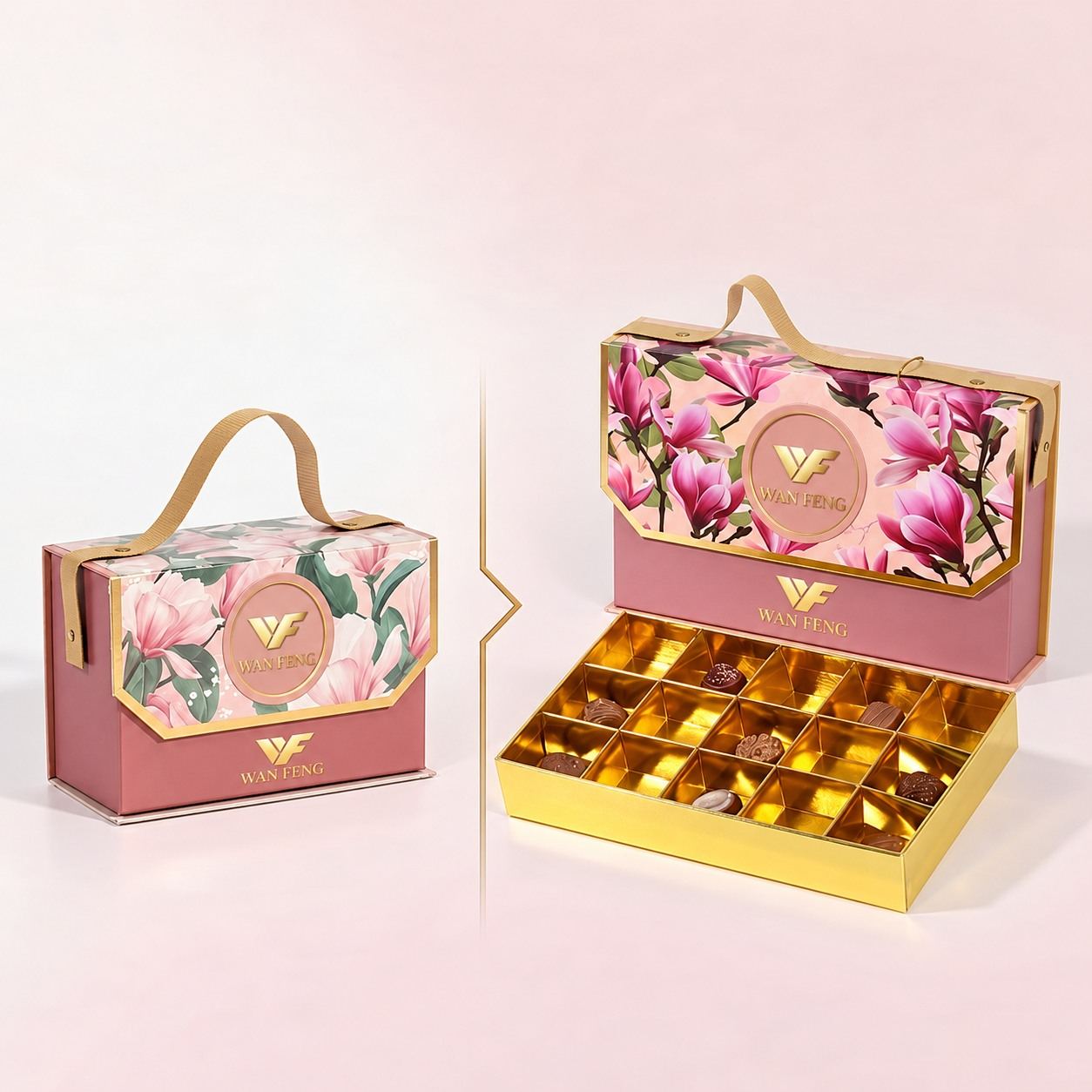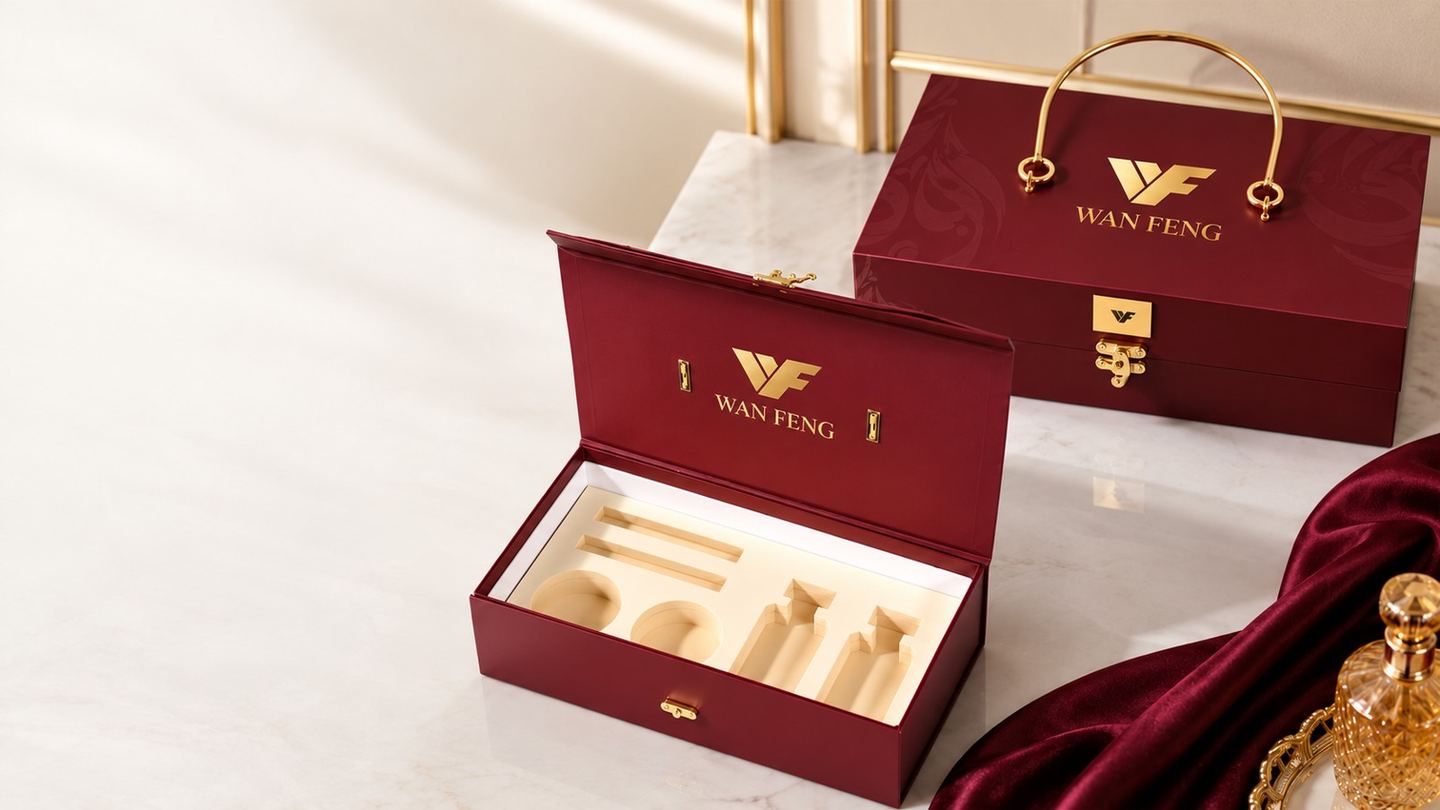
One collection. Different packaging roles.
The compartmented presentation direction organizes several items within one outer box. The central design question is how to make the assortment look intentional while allowing each product to be removed easily. The layout must be developed from the full item list, not from the outer box dimensions alone.
The design challenge
Products with different shapes and weights can be difficult to arrange within a single box. Overly tight compartments make removal awkward; oversized compartments allow movement. The layout needs to account for the actual items and any primary packaging.
A unified visual identity
Build the layout from a full item list and dimensional drawings. Establish a primary focal item, then arrange supporting items with balanced spacing. Keep branding visible without covering product labels or the access points needed to lift each item.
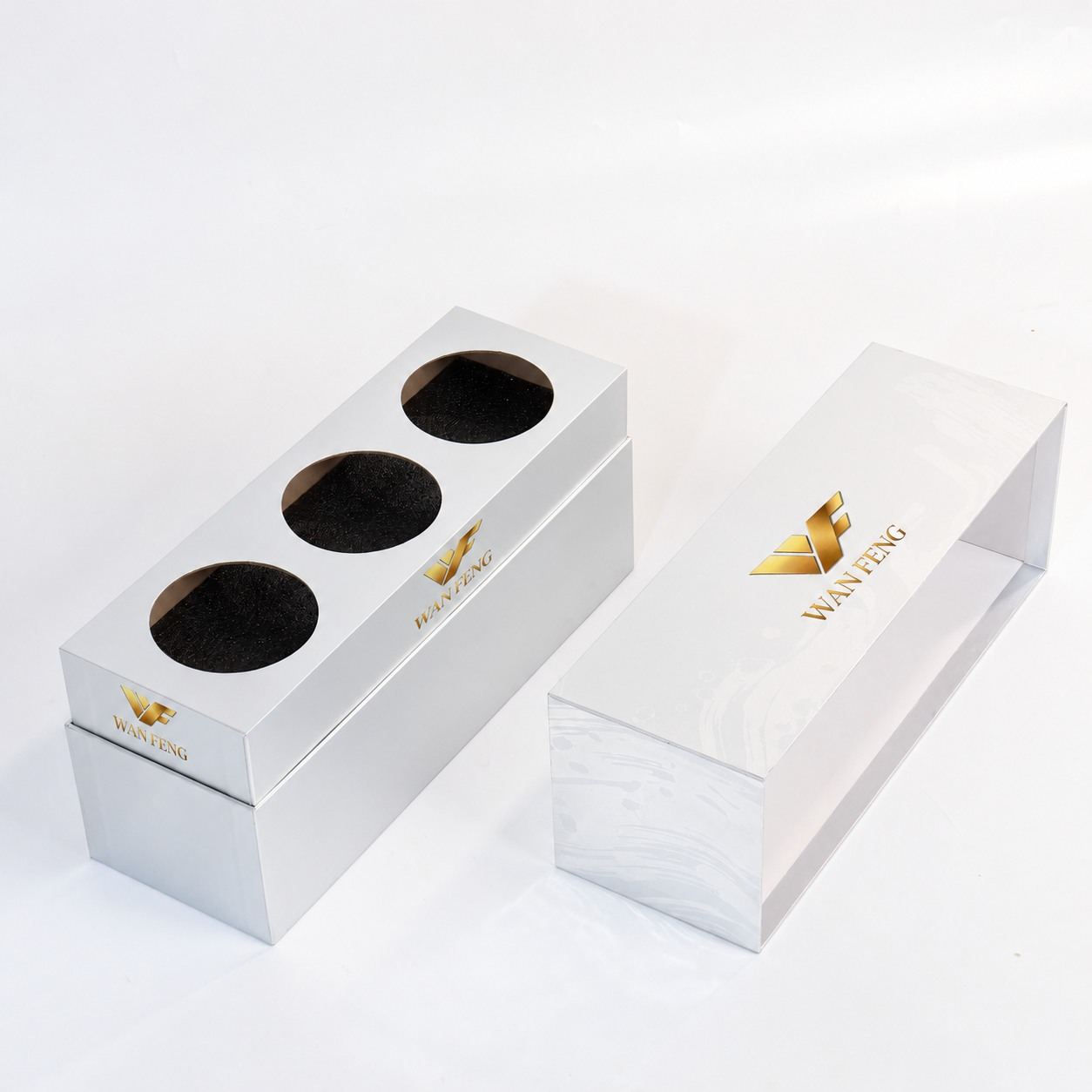
Inside the packaging collection
Review folded board partitions, fitted trays or other insert options against the product load. Propose a rigid outer structure only after checking the combined weight. Insert depth and support should be tested using representative items.
Specification review before quotation
| Item | What to agree | Approval reference |
|---|---|---|
| Structure & dimensions | Internal dimensions, product orientation and opening clearance | Blank structural sample |
| Paper & board | Paper swatch, board construction and color reference | Named material specification |
| Printing & finish | Artwork revision, logo position and surface treatment | Physical printed / finished sample |
| Interior fit | Product support, removal access and insert clearance | Sample with representative products |
| Packing | Surface protection, carton layout and unit count | Approved packing instruction |
Where material meets finishing
Use a controlled surface treatment to connect the outer box and internal arrangement. Trial any reflective or metallic effect on a physical sample rather than relying on screen artwork. Keep contact points smooth so the insert does not mark the products.
From design approval to production
Create a blank structural sample before finalizing decorative details. Check product movement, finger access, lid closure and loaded handling. Approve the assembled presentation with the full assortment in place, then record the layout for production checks.
Check dimensions, opening and product fit.
Review color, logo, surface and assembly.
Record revisions and acceptance criteria.
Agree protection, carton layout and identification.
Protecting the presentation in transit
Confirm the delivery destination, packed weight, carton quantities and required arrival date before selecting a shipment plan. Record the packing arrangement and carton identification in the approved specification. Production and transport dates should be quoted against the final artwork, sample approval and order quantity.
A coordinated packaging solution
A quotation-ready specification should bring together the approved artwork, structural drawing, material references, product fit, finishing reference, packing method and acceptance criteria. These documents provide a buyer with a clear basis for reviewing the proposal and comparing the delivered packaging with the agreed sample.